

If you fell on your hand and now have wrist pain, swelling, bruising, localised tenderness or difficulty gripping, a fracture is possible.
However, no single symptom can confirm that your wrist is broken. Some wrist fractures still allow you to move the wrist and may not cause an obvious change in shape.
Because sprains and fractures can feel similar, a clinical examination and X-ray are often needed to determine the cause of your symptoms and guide appropriate treatment.
At a Glance
Pain and swelling can occur with both fractures and sprains.
Being able to move your wrist does not rule out a fracture.
A deformed wrist needs urgent assessment, but many fractures look normal.
A clinical examination and imaging may be needed to confirm the injury.
Numbness, cold or discoloured fingers, an open wound or severe deformity require urgent care.
What Happens When You Fall on Your Hand?
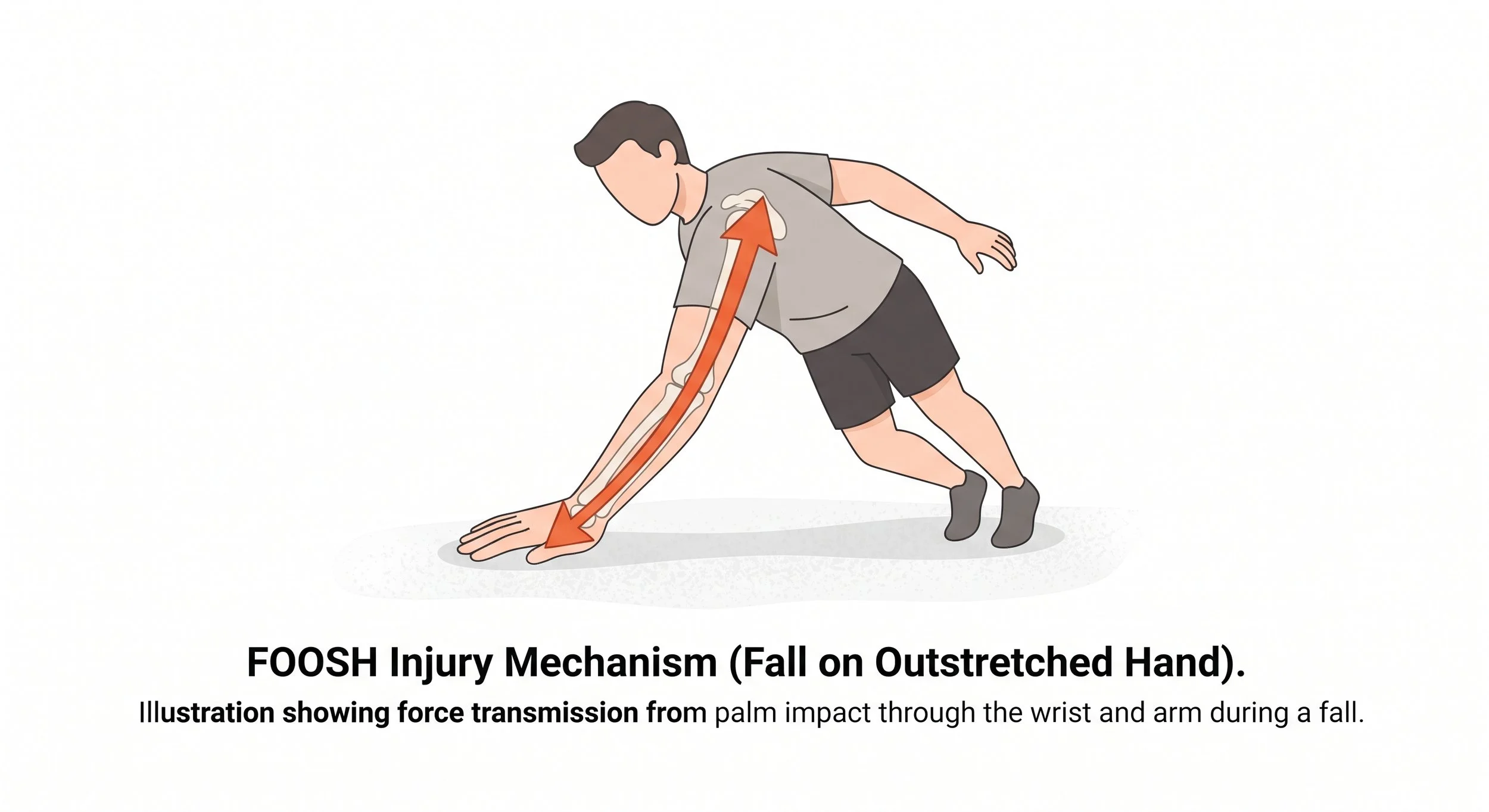
When you fall, it is natural to put your hand out to protect yourself and break the impact. This sudden force travels through the palm into the wrist, which can strain the ligaments or, if the force is strong enough, cause a fracture. Doctors often describe this as a “fall on an outstretched hand”, sometimes shortened to FOOSH. The type of injury depends on factors such as how you landed, the direction of the force and the strength of the bones and surrounding tissues.
Why Can Falling on Your Hand Break the Wrist?
The wrist is made up of several bones working together. The radius and ulna are the two long bones of the forearm, and they connect with a group of eight small bones in the wrist called the carpal bones. When you land on your hand, the force of the impact travels through these structures. If the force is greater than the bones can absorb, one of them may fracture. The radius, particularly near the wrist, is a common site of injury after a fall.
What Is a Distal Radius Fracture?
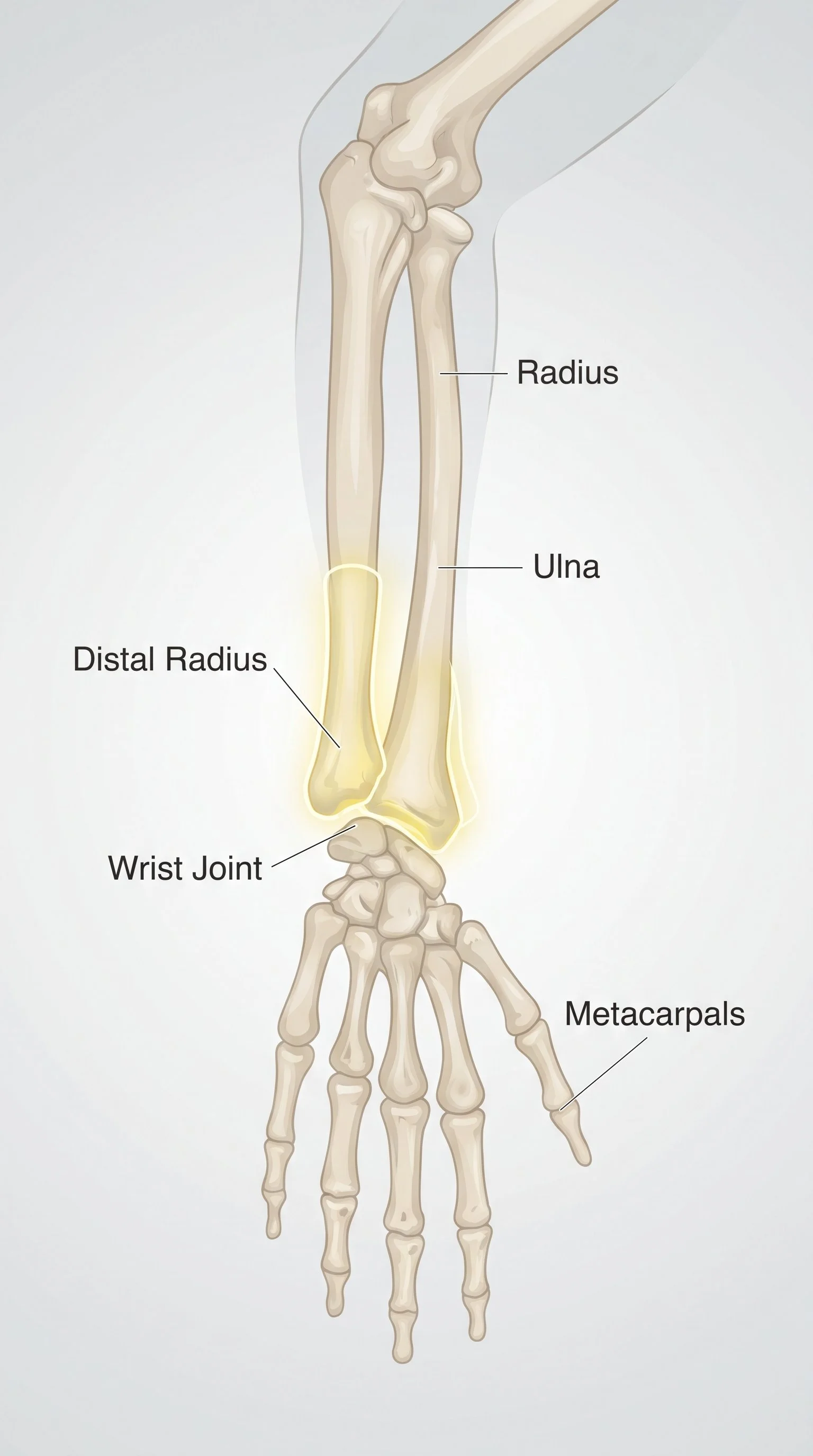
The radius is one of the two long bones in the forearm, alongside the ulna. The term “distal” simply refers to the end of the bone closest to the wrist. A distal radius fracture therefore means a break in the radius near the wrist joint. It is one of the more common wrist fractures and often happens after a fall, when someone instinctively puts out a hand to protect themselves. The force from landing on an outstretched hand travels through the wrist and can be enough to break the lower end of the radius.
Can Other Wrist Bones Break in a Fall?
Yes. A fall can also injure one of the smaller carpal bones that make up the wrist. One example is the scaphoid, a small bone located on the thumb side of the wrist. A scaphoid fracture may cause pain or tenderness around this area, especially after landing on an outstretched hand. Because some small wrist fractures can be less obvious at first, persistent pain after a fall should still be assessed even if the wrist does not look deformed.
What Are the Signs of a Broken Wrist After a Fall?
A broken wrist can cause pain, swelling and difficulty using the hand, but the symptoms can vary depending on the type and severity of the fracture. Possible signs include:
Immediate or persistent wrist pain
Pain that worsens with gripping, squeezing, movement or putting weight through the hand
Swelling
Bruising
Localised tenderness
Difficulty using the hand
Reduced movement or stiffness
Weak grip
An abnormal bend or change in wrist shape
Numbness or tingling
Not every fracture causes every symptom. These signs can also occur with wrist sprains and other injuries, so they cannot confirm a fracture on their own. A clinical examination and imaging may be needed to determine the cause.
Can You Still Move Your Wrist If It Is Broken?
Yes. Some people can still move their wrist or fingers even when a wrist bone is fractured. Movement may be painful, limited or uncomfortable, but it is not always completely lost. Because of this, being able to move your wrist does not safely rule out a fracture. If pain, swelling or tenderness persists after a fall, a clinical assessment and X-ray may still be needed.
Does a Broken Wrist Always Swell or Look Crooked?
No. Significant swelling or an obvious change in wrist shape can raise concern for a fracture, but not every broken wrist looks visibly different. Some fractures cause only mild swelling or bruising, particularly when the broken bone remains well aligned or when a smaller wrist bone is involved. This means a wrist can still be fractured even if it looks relatively normal from the outside.
Does Hearing a Crack Mean the Wrist Is Broken?
Not necessarily. Some people hear or feel a crack, snap or pop at the time of a wrist injury, but this sound alone cannot confirm a fracture. Similar sounds can occur with sprains or other soft-tissue injuries. Likewise, not hearing any sound does not rule out a broken bone, so symptoms and clinical assessment are more important than the presence or absence of a noise.
Where Does a Broken Wrist Usually Hurt?
The location of pain depends on which bone has been injured. A fracture of the radius near the wrist may cause pain around the end of the forearm or across the wrist joint. Pain on the thumb side of the wrist can sometimes suggest an injury to one of the smaller carpal bones, such as the scaphoid. However, pain location alone cannot confirm which structure is injured, so persistent or significant wrist pain after a fall should be clinically assessed.
Can a Wrist Sprain Feel Like a Broken Wrist?
Yes. A wrist sprain and a wrist fracture can cause similar symptoms, including pain, swelling, bruising and difficulty moving or using the wrist. This can make it difficult to tell them apart based on symptoms alone.
For a more detailed comparison, read our guide on [how wrist sprains and fractures can differ]. [INTERNAL LINK REQUIRED — future article: “Wrist Pain After a Fall: Is It a Sprain or a Fracture?”]
How Is a Possible Broken Wrist Diagnosed?
Diagnosis usually starts with understanding how the fall happened and where the wrist hurts. A clinician may examine the wrist for swelling, tenderness, changes in shape and any skin injury. They may also check finger movement, circulation and sensation to make sure the hand is functioning properly.
X-rays are commonly used when a fracture is suspected. In some cases, if symptoms remain concerning despite an initial X-ray, repeat X-rays or other imaging such as CT or MRI may be considered. Not every wrist injury requires every type of scan.
Can an Initial X-ray Miss a Wrist Fracture?
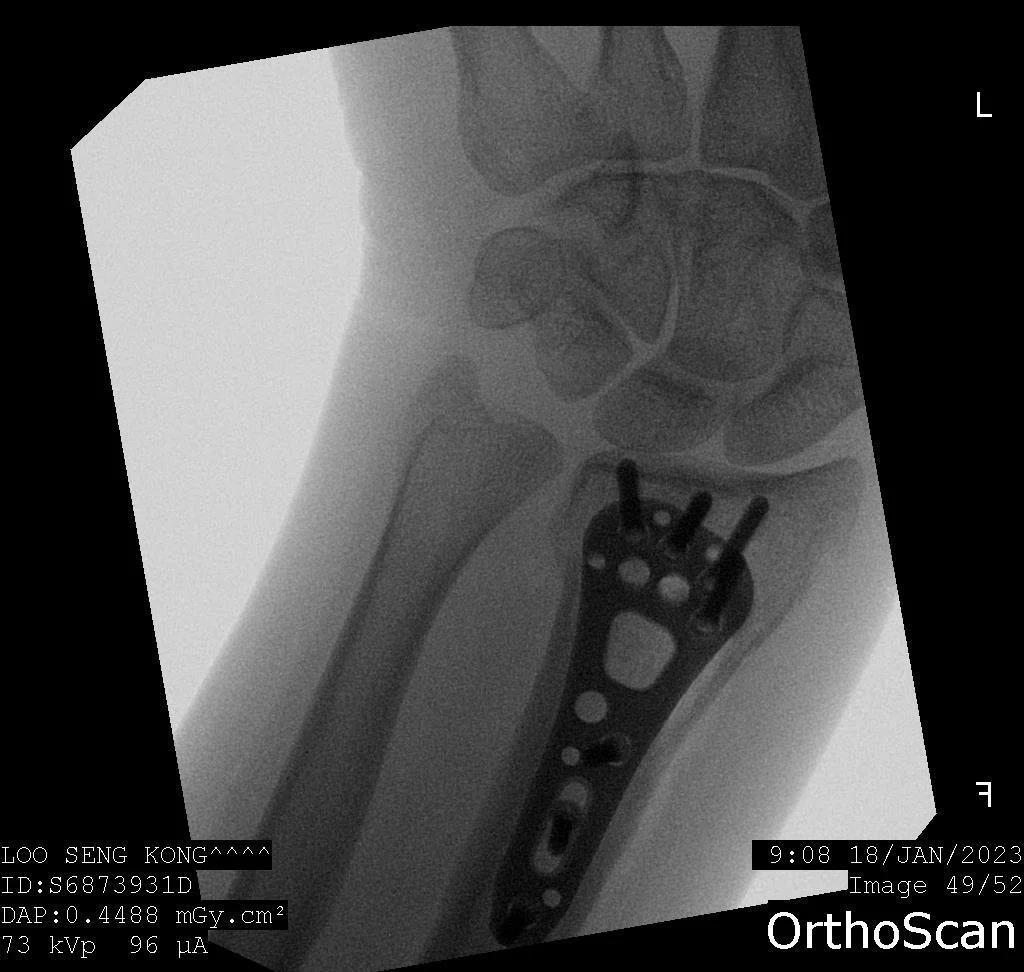
Yes. Some wrist fractures may not be clearly visible on the first X-ray, particularly when the break is small or involves certain carpal bones. If the examination and symptoms still raise concern, a clinician may recommend protecting the wrist, arranging follow-up assessment, repeating the X-ray or using another type of imaging such as CT or MRI. The most appropriate next step depends on the location of the pain, examination findings and individual circumstances.
What Should You Do After Falling on Your Hand?
If your wrist is painful after a fall, stop using or putting weight through it and support it in a comfortable position. Remove rings, bracelets and watches before swelling increases. Avoid repeatedly bending, twisting or testing the wrist, and do not try to straighten it if it looks visibly deformed. Use sensible short-term first aid while arranging an appropriate medical assessment.
For more detailed first-aid guidance, see how to use the RICE method after a wrist injury.
When Does a Wrist Injury Need Urgent Medical Attention?
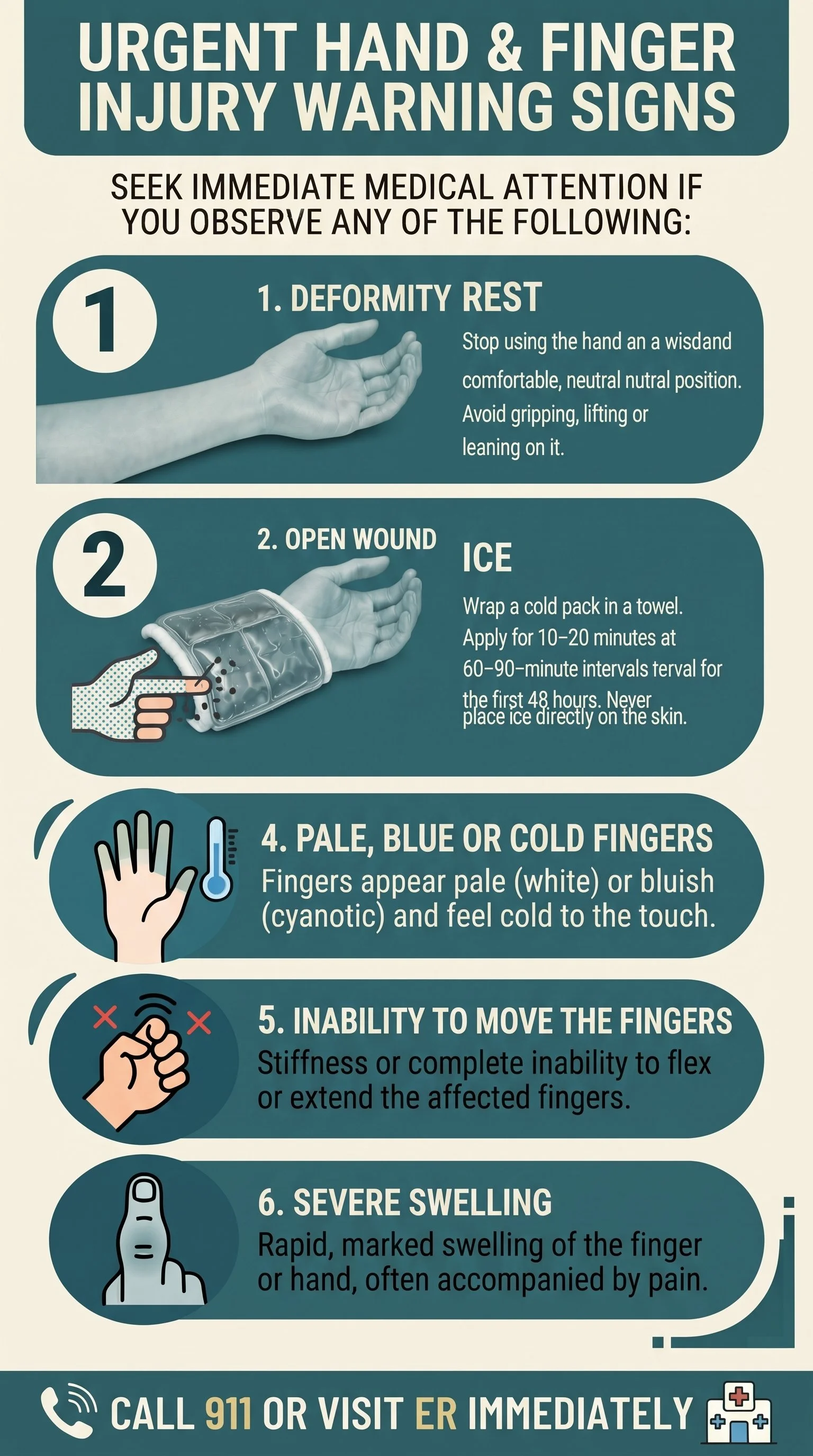
Some wrist injuries require urgent or emergency medical care, particularly when there may be significant bone, nerve, blood vessel or soft-tissue injury. Warning signs include:
The wrist or hand is at an abnormal angle
Bone is visible through the skin
There is an open wound over a suspected fracture
Bleeding cannot be controlled
The fingers become pale, blue or cold
There is numbness or loss of sensation
You cannot move the fingers
Swelling is severe or increasing rapidly
Severe pain follows a substantial injury
If any of these signs are present, seek appropriate urgent medical attention rather than waiting for a routine clinic appointment.
If none of these emergency signs are present but pain, swelling, tenderness or difficulty using the wrist persists after a fall, arrange a prompt medical assessment to check for a possible fracture or other injury.
When Does a Wrist Injury Need Urgent Medical Attention?
Urgent or Emergency Warning Signs
Seek urgent or emergency medical care if you notice:
The wrist or hand is at an abnormal angle
Bone is visible through the skin
An open wound over a suspected fracture
Bleeding that cannot be controlled
Fingers that become pale, blue or cold
Numbness or loss of sensation
Inability to move the fingers
Severe or rapidly increasing swelling
Severe pain following substantial trauma
These signs may indicate a more serious injury and should not be managed by waiting for a routine clinic appointment.
Arrange a Prompt Assessment When
If none of the emergency signs above are present, arrange a prompt medical assessment if:
Pain prevents you from using the hand normally
Swelling or bruising is marked or increasing
There is focused tenderness over the wrist
Gripping or putting weight through the wrist is painful
You are unsure whether the wrist may be fractured
Symptoms persist or become worse
A medical assessment can help determine whether the injury is a fracture, sprain or another type of wrist injury.
Frequently Asked Questions
-
Yes. Some people can still move their wrist or fingers despite having a fracture. Movement may be painful, stiff or reduced, but it is not always completely lost. Being able to move the wrist therefore does not rule out a broken bone. If pain, swelling or tenderness continues after a fall, medical assessment may still be appropriate.
-
Yes. Although swelling is common after a wrist fracture, some fractures cause only mild swelling or little visible change, particularly if the bones remain aligned or a smaller wrist bone is involved. The amount of swelling alone cannot determine whether the wrist is fractured, so other symptoms and examination findings also need to be considered.
-
No. Some fractures cause an obvious change in the wrist’s shape, but many do not. A wrist may appear relatively normal when the broken bone has not moved significantly out of position. Because appearance alone cannot rule out a fracture, persistent pain, tenderness or difficulty using the hand after a fall may warrant assessment.
-
No. Hearing or feeling a crack, snap or pop during a fall does not prove that a bone has broken. Similar sounds can occur with sprains and other injuries. Likewise, a fracture can occur without any noticeable sound. Diagnosis depends on the overall symptoms, clinical examination and, when appropriate, imaging.
-
Not every fall requires an X-ray. A clinician will usually consider how the injury happened, where you have pain, and findings such as swelling, tenderness and difficulty using the wrist. If a fracture is suspected, an X-ray is commonly used to assess the bones. The need for imaging depends on the individual injury.
-
Yes. Some small or subtle wrist fractures may not be clearly visible on an initial X-ray. If symptoms and examination findings continue to suggest a fracture, a clinician may recommend protecting the wrist, reassessing it, repeating X-rays or considering another type of imaging. The appropriate approach depends on the individual circumstances.
Getting Assessed
Dr. Jonathan Lee Yi-Liang is the founder and medical director of the Singapore Hand & Reconstructive Microsurgery Clinic, an accredited specialist in hand and reconstructive microsurgery.
If your wrist pain persists, worsens, or you're unsure whether first aid is enough, you can contact the clinic for an assessment at +65 6836 8382 or WhatsApp +65 9451 5807.
Our clinic works with major insurers, including AIA, Prudential, Great Eastern, NTUC Income and HSBC, among others. If you're wondering about coverage, feel free to ask our clinic team when you book — they can guide you on the information or documents that may help you check what your policy covers, which will depend on your individual policy, diagnosis and the treatment involved.