
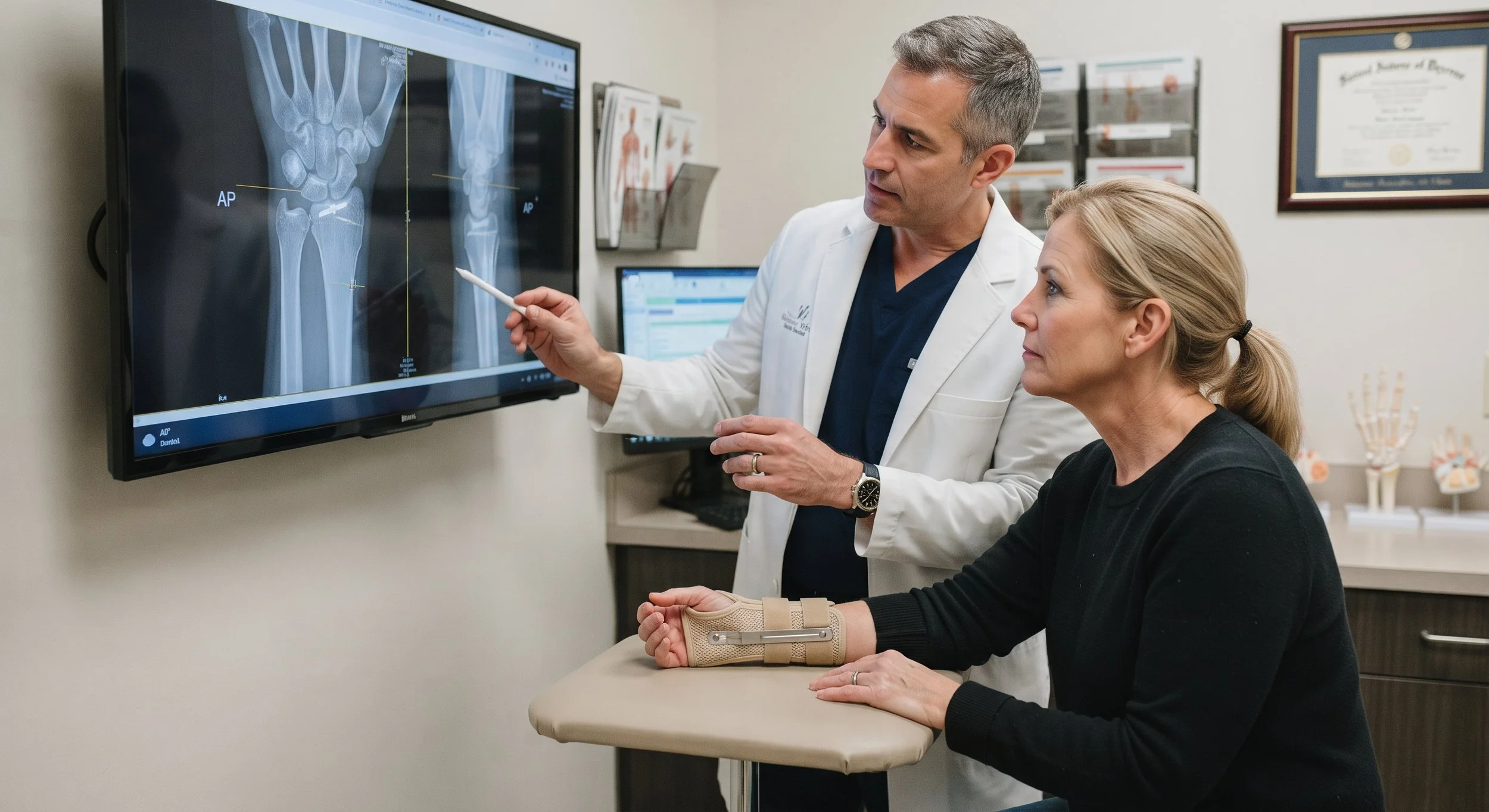
Not every distal radius fracture needs surgery. A cast may be suitable when the bone can be brought into acceptable alignment and remains stable while healing. Surgery may be considered if the fracture is unstable, significantly out of position, extends into the wrist joint surface, or cannot be held adequately in a cast. The aim is to restore function while avoiding unnecessary treatment. However, the choice is individual: it depends not only on the X-ray or the fact that the wrist is broken, but also on the person’s needs, health and goals.
At a Glance
Not every distal radius fracture needs surgery.
Some displaced fractures can still be treated with a cast.
Acceptable alignment must be restored and maintained.
Joint involvement, multiple bone fragments and other injuries may affect treatment.
Your age, health, work, activity level and functional needs also matter.
Does Every Distal Radius Fracture Need Surgery?
No. Distal radius fractures vary considerably, and many can heal without surgery. Some remain in a satisfactory position and can be treated in a cast. Others need a reduction first—a procedure to move the broken bone fragments back into alignment—before a cast is applied.
Surgery may be considered if the fracture cannot be restored to, or maintained in, an acceptable position. The key is not simply whether the wrist is broken, but whether it can heal in a position that supports the person’s needs. The next step is to assess what makes casting or surgery more suitable.
How Does a Hand Surgeon Decide Between a Cast and Surgery?
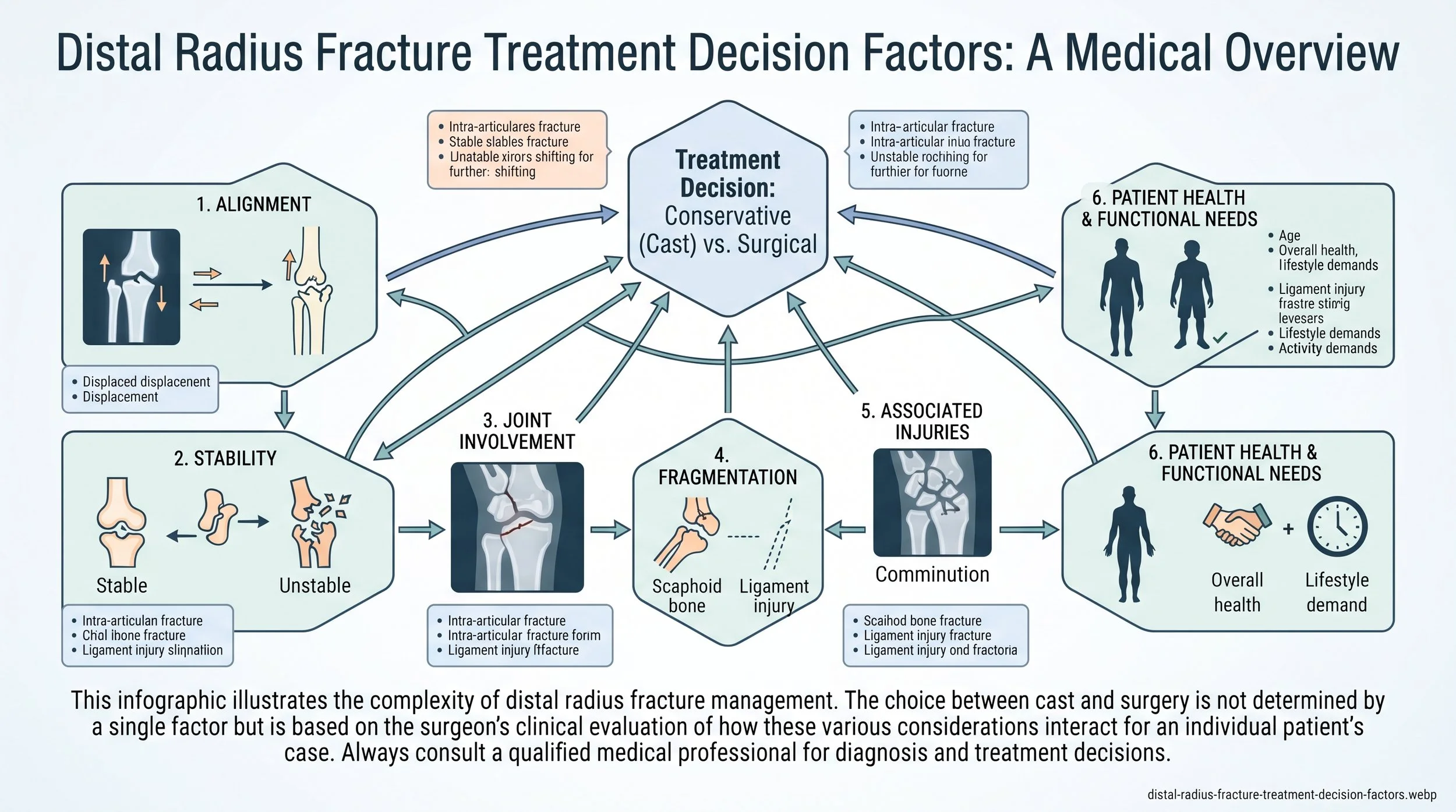
A hand surgeon considers the fracture’s pattern and position alongside your health and everyday needs to recommend a cast or surgery.
The assessment includes how well the bone fragments line up (alignment), whether they are likely to stay in position (stability), whether the break extends into the joint surface, and how many fragments are present. Associated injuries—such as damage to nearby ligaments or nerves—also matter.
These findings are considered alongside your age, overall health, occupation, activity level and the tasks you need your hand to perform. No single factor should be interpreted in isolation: the recommendation depends on the overall picture, not one X-ray finding alone.
Is the Fracture Displaced or Out of Alignment?
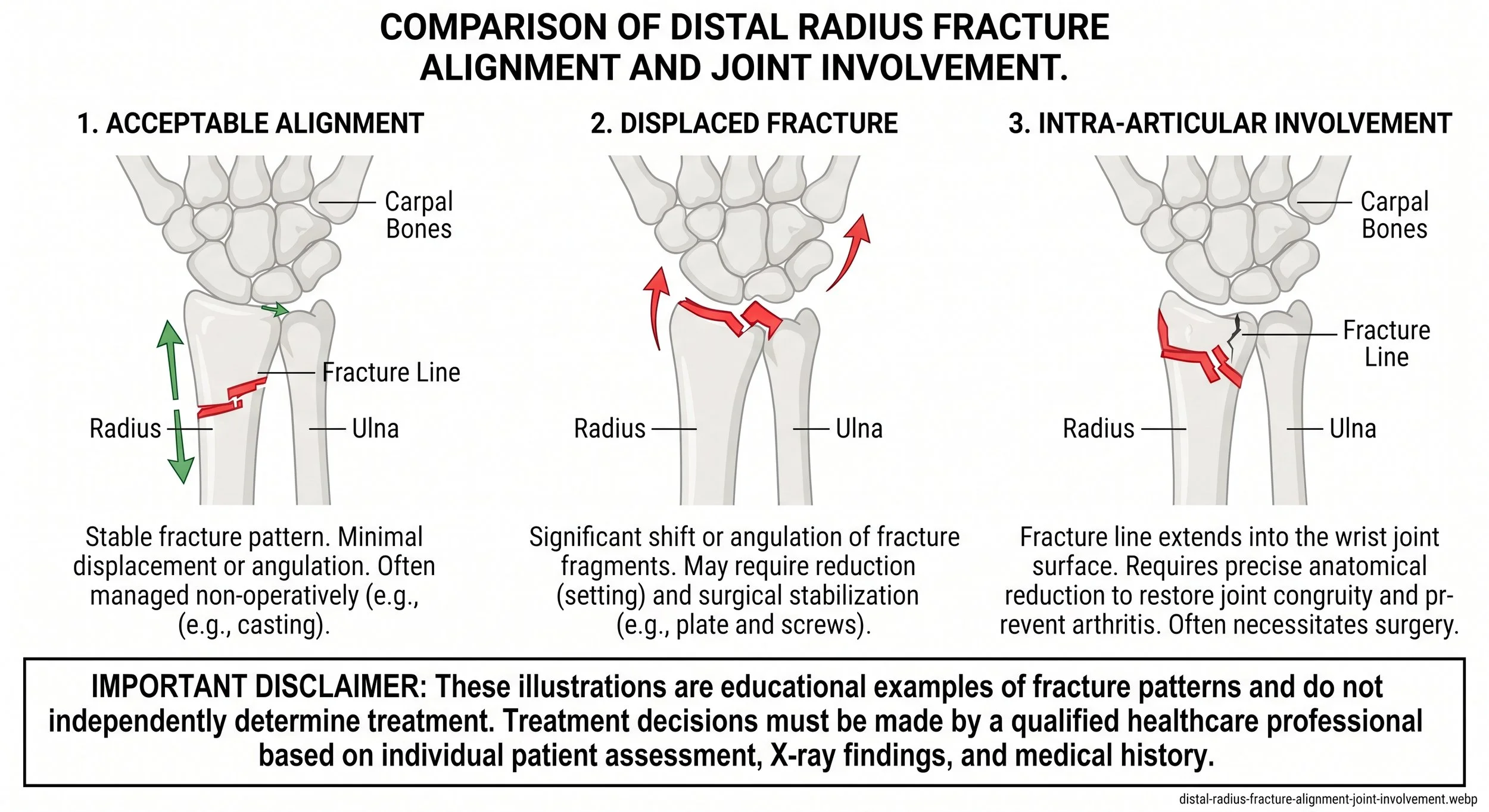
“Displaced” means the broken bone fragments have moved away from their usual position. How far they have moved, and in which direction, matters—but displacement does not automatically mean surgery is needed. Some displaced fractures can be realigned and held in a cast.
Clinicians assess how the position could affect the way the wrist moves and bears weight, the forearm’s ability to turn the palm up and down, and everyday hand function if the bone heals that way. They also consider whether acceptable alignment can be achieved and maintained during healing.
Can Acceptable Alignment Be Restored?
A reduction means carefully repositioning the broken bone fragments to improve their alignment. Some fractures can be reduced without surgery—known as a closed reduction—and then supported in a cast or splint while they heal.
Other fractures cannot be restored adequately through closed reduction. Some may initially return to a satisfactory position but have features that make them difficult to hold there during healing. In these cases, surgery may be considered to restore and maintain acceptable alignment.
Will the Fracture Stay Stable in a Cast?
A fracture may look well aligned after reduction but move out of position again as swelling decreases and healing progresses. An unstable fracture is one that is more likely to shift despite being supported in a cast or splint.
Follow-up appointments allow the clinician to check symptoms, examine the wrist and assess whether the cast or splint still fits properly. Repeat X-rays may be recommended to confirm that the bone fragments remain acceptably aligned. The timing and number of these checks depend on the fracture and the treating clinician’s assessment.
Does the Fracture Extend Into the Wrist Joint?
An intra-articular fracture is a break that extends into the wrist joint surface. Because this surface normally allows the bones to glide smoothly against one another, its alignment and evenness may affect wrist movement and how pressure is distributed across the joint.
However, not every intra-articular fracture requires surgery. The recommendation depends on factors such as how far the joint surface has shifted, whether acceptable alignment can be restored and maintained, and the person’s health and functional needs.
Is the Bone Broken Into Multiple Fragments?
A comminuted fracture means the bone has broken into several fragments rather than two main pieces. Having multiple fragments can make it more difficult to restore the bone’s alignment or keep it stable in a cast while it heals.
However, fragmentation alone does not automatically mean surgery is required. It is one part of the overall assessment and must be considered alongside the fracture’s alignment, stability, joint involvement and the patient’s individual needs.
Are There Other Injuries Around the Wrist?
A distal radius fracture may occur with other injuries around the wrist. The clinician will check for nerve symptoms, tendon or ligament injuries, open wounds and concerns about blood circulation to the hand.
These findings may change how urgently treatment is needed or which treatment approach is recommended. They are considered alongside the fracture’s alignment, stability, and overall pattern when developing the treatment plan.
What Does the Individual Patient Need From the Wrist?
Treatment should support the individual’s health, circumstances and functional goals. Age, general health and bone quality may influence healing and the risks of different treatments, but age alone does not determine whether surgery is appropriate.
The clinician may also consider hand dominance, occupation, caregiving responsibilities, activity level, sports and hobbies. These factors help identify how much strength, movement and stability the person needs from the wrist.
Practical considerations matter too, including whether the person can manage cast care and attend follow-up appointments. After understanding the expected benefits, risks and limitations of each option, the patient’s preferences should also help shape the final decision.
When May a Cast Be Suitable for a Distal Radius Fracture?
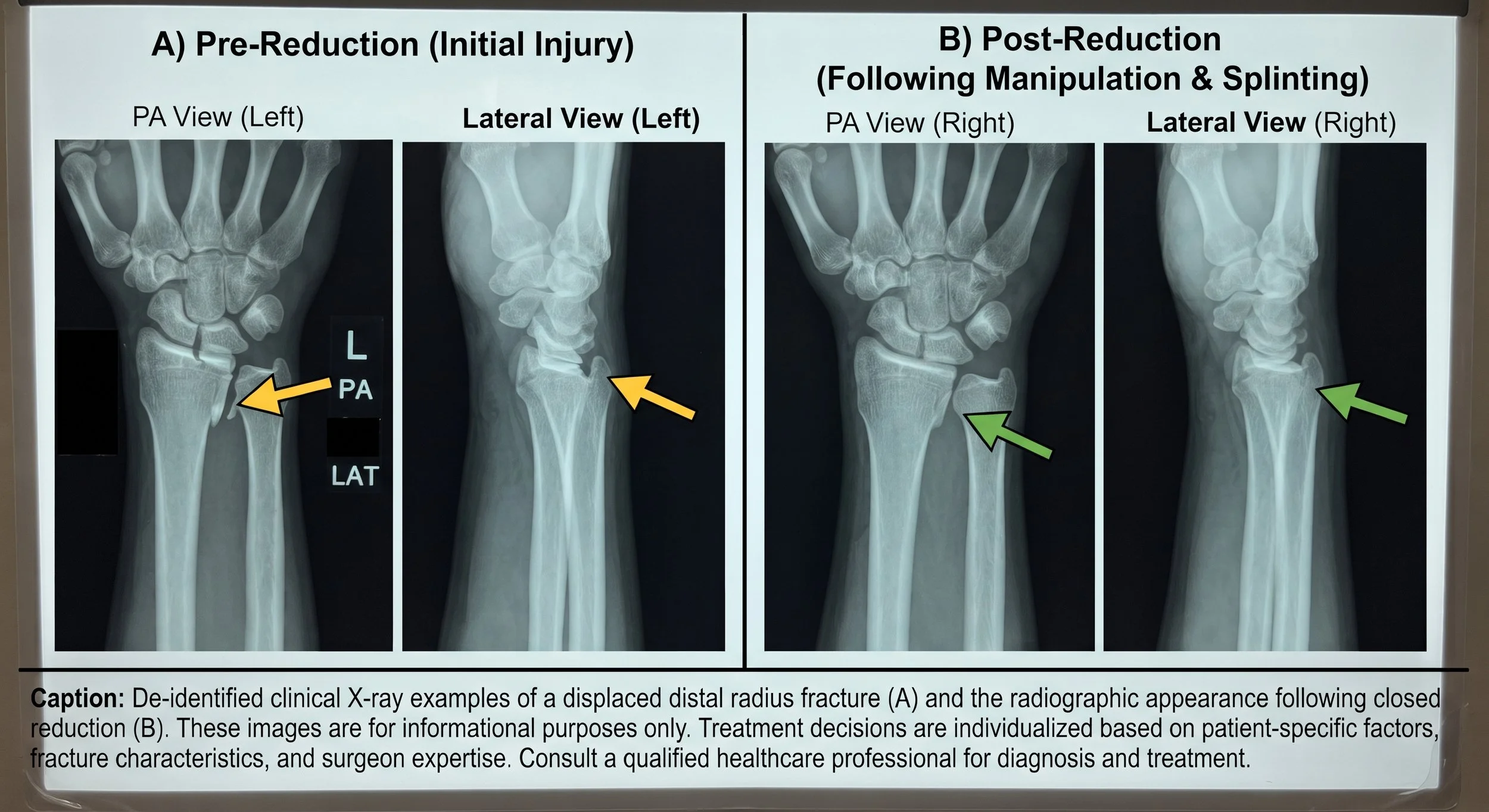
A cast may be suitable when the fracture is already acceptably aligned or can be repositioned without surgery and is expected to remain sufficiently stable while healing. Non-operative treatment may also be considered when the anticipated wrist function is appropriate for the individual, or when surgery presents greater concerns because of the person’s health or informed preferences.
Being treated in a cast does not necessarily mean the fracture is minor. The treatment plan may still involve:
Reduction to reposition the bone
Management of swelling
Adjustment or replacement of the cast or splint
Follow-up examinations
Repeat X-rays
Monitoring for any loss of alignment
Hand therapy or rehabilitation when appropriate
The clinician will review healing and alignment over time and adjust the plan if necessary.
Can a Displaced Distal Radius Fracture Heal Without Surgery?
A displaced distal radius fracture can sometimes heal without surgery. Some displaced fractures can be carefully repositioned and held satisfactorily in a cast while they heal.
Whether this is appropriate depends on the alignment achieved after repositioning, whether the fracture remains stable during healing and whether non-operative treatment is likely to provide an acceptable outcome for that individual. Follow-up examinations and X-rays may be needed to check the position. Surgery may still be recommended if acceptable alignment cannot be achieved or maintained.
When May Surgery Be Considered?
Surgery may be considered when the fracture cannot be restored to, or maintained in, an acceptable position without an operation. It may be discussed when:
Closed reduction does not restore acceptable alignment
The fracture moves out of position again after reduction
The fracture pattern is considered unstable
The wrist joint surface is significantly affected
Multiple fragments are difficult to control
An open wound communicates with the fracture
There are associated nerve, tendon, ligament or circulation concerns
The expected function without fixation may not meet the individual’s needs
Surgery generally aims to restore the bones to an appropriate position and keep them there while healing occurs. Different fixation methods are available, and the choice depends on the fracture and the individual patient.
Is Surgery Better Than Casting for a Distal Radius Fracture?
What Are the Trade-Offs of Each Option?
Both cast treatment and surgery have potential benefits and drawbacks. The balance depends on the fracture and the individual patient.
Cast treatment
Avoids an operation and anaesthetic
The fracture may shift during healing
Requires follow-up examinations and repeat X-rays
May cause discomfort, pressure or skin concerns
Immobilisation may lead to wrist stiffness
The treatment plan may need to change if alignment is lost
Surgery
May hold selected unstable fractures in position more reliably
Involves surgical and anaesthetic risks
May cause infection or tendon, nerve or hardware-related problems
Requires wound care and postoperative follow-up
Rehabilitation may be needed
Does not guarantee a completely normal wrist
The most appropriate option is the one whose expected benefits and risks best match the patient’s fracture, health and functional needs.

How Quickly Does the Treatment Decision Need to Be Made?
Treatment decisions for a displaced or unstable distal radius fracture can be time-sensitive because swelling changes and the bone begins healing. However, the appropriate timing depends on the fracture and the individual; there is no universal deadline.
If you have been advised to see a hand surgeon, arrange the review within the timeframe recommended by your treating clinician. If you are unsure about the timing, ask the clinician or clinic directly.
Should You Get a Second Opinion Before Wrist-Fracture Surgery?
A second opinion may be reasonable if you do not understand why surgery was recommended or feel unable to make an informed decision. It can help clarify the alternatives, the fracture’s alignment or stability, and the likely consequences of each option. It may also be useful when complex health conditions or functional needs affect the decision.
Seeking clarification does not mean distrusting your first clinician, and another opinion may support the same recommendation. However, you should not delay urgent treatment or ignore the recommended timeframe simply to collect more opinions.
For the appointment, bring:
X-rays, other scans and imaging reports
Emergency-department or clinic notes
A current medication list and details of relevant health conditions
Questions about work, caregiving, sport and everyday hand use
Questions to Ask About Your Distal Radius Fracture
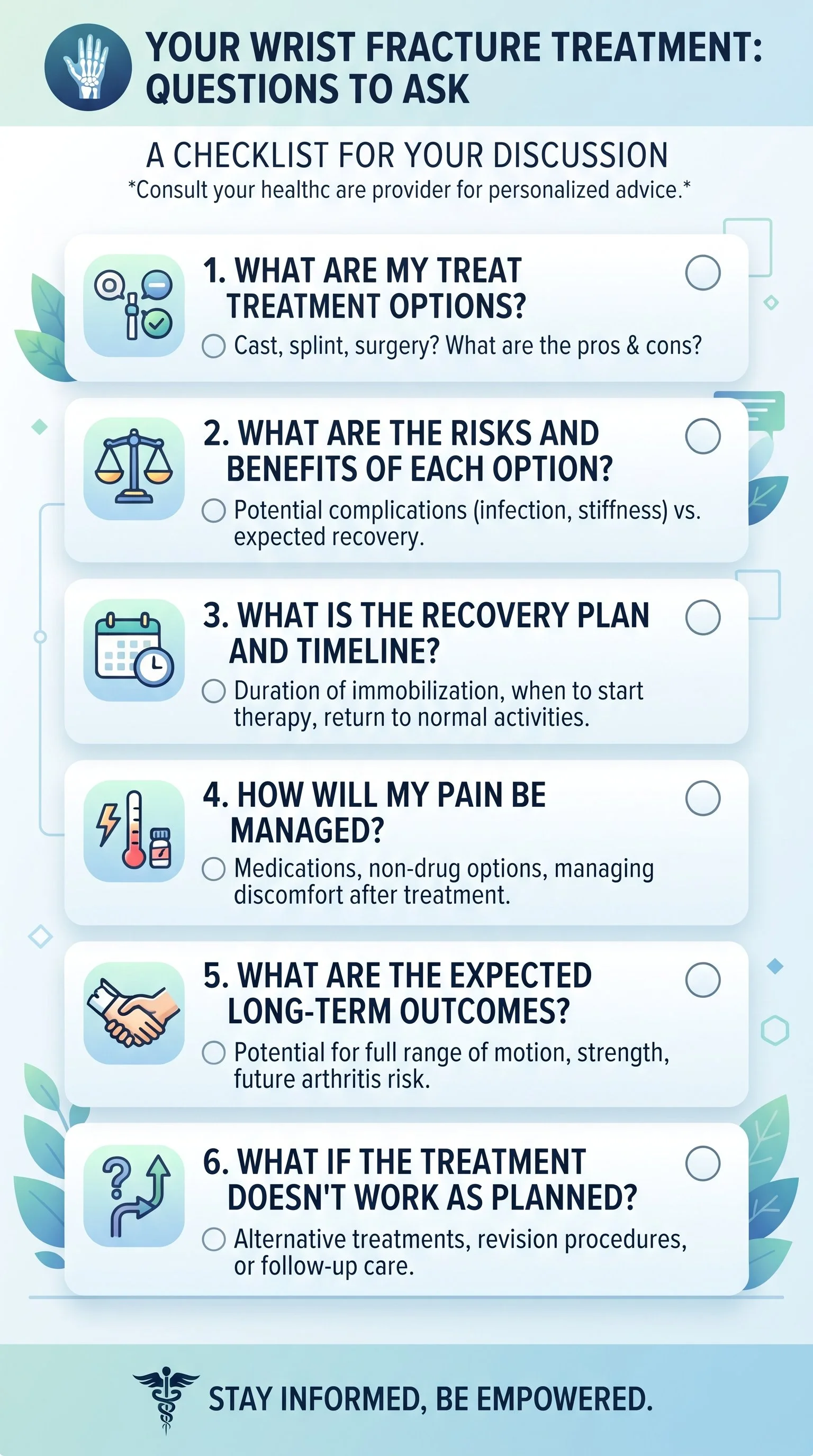
These questions can help you understand your options and make an informed decision together with your clinician:
Is my fracture displaced?
Does it involve the wrist joint?
Has acceptable alignment been achieved?
Is the fracture likely to stay stable in a cast?
What might happen if it heals in its current position?
Why do you recommend a cast or surgery for me?
What are the main risks and expected benefits of each option for me?
How soon does the decision need to be made?
How will healing and alignment be monitored?
How might each option affect my work, independence or usual activities?
Frequently Asked Questions
-
Not every distal radius fracture needs surgery. Casting may be suitable when the bone is acceptably aligned and likely to remain stable. Surgery may be considered when that position cannot be achieved or maintained. The patient’s health and functional needs also influence the recommendation. AAOS guidance
-
Some displaced distal radius fractures can heal in a cast after the bone is repositioned, known as reduction. Suitability depends on the alignment achieved, whether it remains stable and the expected wrist function for that person. Further movement during healing may mean the treatment plan needs to change. AAOS guidance
-
A reduced wrist fracture may still be unstable, meaning the fragments are likely to shift before healing. The cast may also become looser as swelling decreases. Follow-up assessment and X-rays help identify movement and determine whether cast adjustment or a different treatment is needed. AAOS guidance
-
An intra-articular distal radius fracture reaches the wrist joint surface, but does not automatically require surgery. Clinicians assess how much the surface has shifted and whether acceptable alignment can be maintained. Casting may be suitable for some stable fractures, depending on the person’s needs.
-
Surgery is not automatically better for an older patient with a distal radius fracture. In many older adults studied, surgery has not improved long-term patient-reported function compared with casting, although early recovery may differ. The decision should consider fracture characteristics, health, activity level and personal priorities rather than age alone.
-
Healing out of alignment is called a malunion. Some people have few symptoms, while others experience pain, stiffness or difficulty turning the forearm. The effect depends on the healed position and the person’s needs. Further treatment is considered according to symptoms and function, not simply how the wrist or X-ray looks.
Getting Assessed
Dr. Jonathan Lee Yi-Liang is the founder and medical director of the Singapore Hand & Reconstructive Microsurgery Clinic, an accredited specialist in hand and reconstructive microsurgery.
If your wrist pain persists, worsens, or you're unsure whether first aid is enough, you can contact the clinic for an assessment at +65 6836 8382 or WhatsApp +65 9451 5807.
Our clinic works with major insurers, including AIA, Prudential, Great Eastern, NTUC Income and HSBC, among others. If you're wondering about coverage, feel free to ask our clinic team when you book — they can guide you on the information or documents that may help you check what your policy covers, which will depend on your individual policy, diagnosis and the treatment involved.